About CEL Initiatives
Compass for Equitable Learning Initiative works to advance inclusive educational equity, making sure that children who are most often left out of good educational provision are reached by it.
We connect three things that too often sit apart: what the evidence shows, what education policy requires, and what actually happens in a classroom.
Our Mission and Vision
Our mission describes the work we do. Our vision describes what we are working towards.
Our Mission
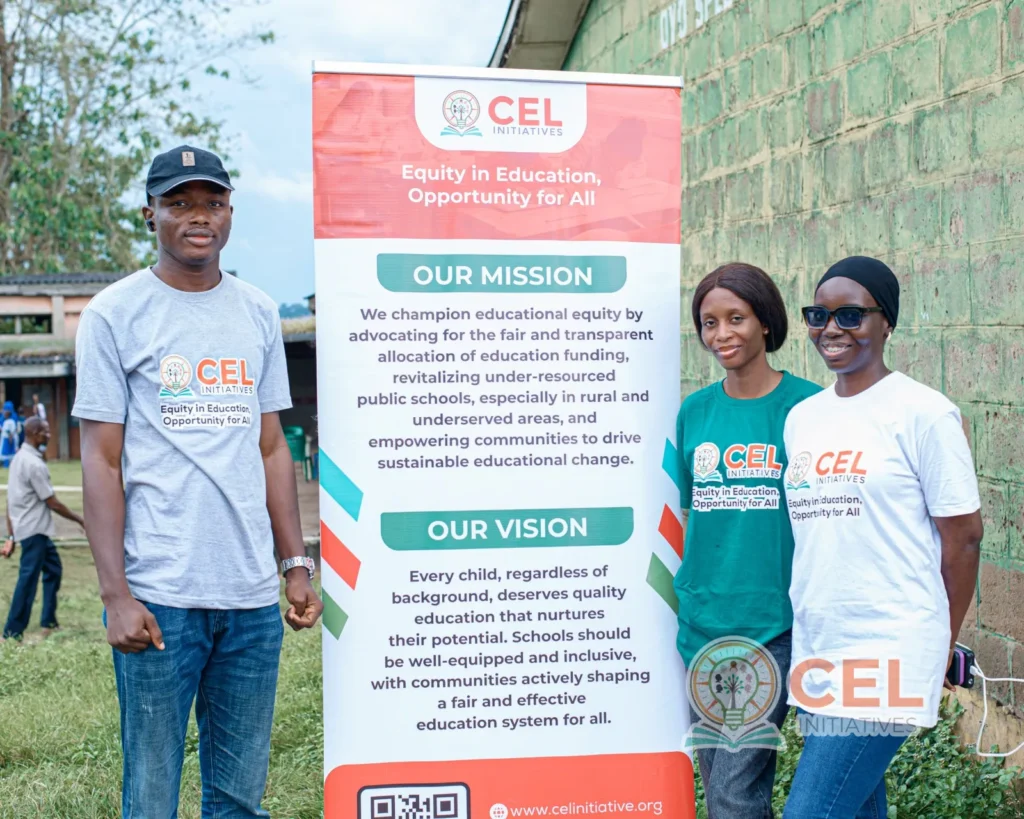
CEL Initiatives champions education equity by strengthening under-resourced schools, supporting all students, and empowering communities to create lasting change.
Our Vision
A future where every child, no matter their background or circumstances, has access to a fully resourced, high-quality education, where educators are supported and equipped, and communities take an active part in children’s learning.
Our Story
Compass for Equitable Learning Initiative was founded on a simple observation: we know a great deal about how children learn, but too little of that knowledge reaches the classrooms where it is needed most. CEL exists to help close that gap by turning evidence into practical learning approaches and working alongside schools, teachers, families, and communities to make education more inclusive and responsive to every child, particularly children in under-resourced settings and children with disabilities.
Our Approach
Research
We begin with evidence, what is known about how children learn, where provision is falling short, and what has been shown to work. This is what our materials and programmes are built on.
Advocacy
Evidence only matters if it reaches the people who make decisions. We work to bring greater attention to educational equity and inclusion, and to the specific needs of learners who are routinely underserved.
School Support
We work directly with schools and educators, providing materials, approaches and support that strengthen teaching and make classrooms work better for a wider range of learners.
Community Engagement
Learning does not stop at the school gate. We work with families and communities so that children are supported to learn and take part beyond the classroom.
Each area strengthens the others. Research gives our school support a foundation; what we see in schools sharpens our advocacy; and working with communities tells us whether an approach holds up in the conditions children actually learn in.